The fear of the LORD is the beginning of wisdom,
and knowledge of the Holy One is understanding (New Internation Version - Proverbs
9:10).
Over a century ago, Bethel’s simple Gospel children’s program was born.
The genesis of our ministry was biblical instruction each Lord’s Day for the kids of 3 Fisher Street families during the years of WW1.
And consequently, our Sunday School may be the longest-running, consecutively-held children’s program in our city.
But what impact can we measure over that century-plus of children’s ministry?
How do we evaluate as Bethel’s kids programs – AWANA, Bethel Repertory Company, Youth Group and classroom Sunday School – conclude for another year?
One subjective metric is to examine the general spiritual health of our children against their cohort – kids of similar ages and circumstances.
The fear
of the LORD is the beginning of wisdom, and the knowledge of the Holy One is
insight (English Standard Version - Proverbs 9:10).
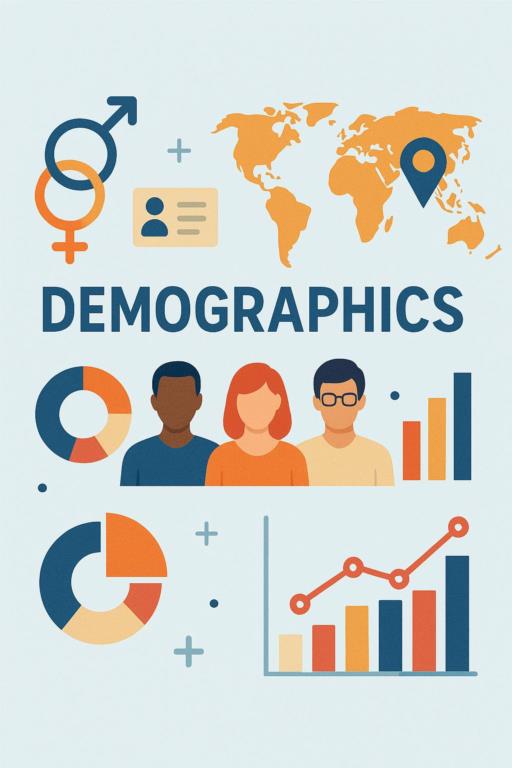
Demographics is the study of data relating to
populations.
And in recent decades, demographers have studied, surveyed, and categorized – Canada’s and the world’s peoples – by generation according to shared characteristics and traits.
For
example, the oldest citizens of our country and the western world are often
referred to as the Silent Generation (those born 1928-45). These resilient folks knew the Great Depression of the 1930s, or the aftermath thereof for those born near the end of that cohort. And they experienced the horrors of WW2 and the loss of many who left to fight and didn’t come home.
Their
children were the largest bulge on demographic charts, the generation known as Baby
Boomers (born 1946-64). This cohort generally exhibited a strong work
ethic, optimism for what was possible, robust social engagement and a
never-before-seen desire to impact culture, the economy and the technology of
the era.
The broader
perspective of Boomers globally was shaped by 2 social engagement issues born – at least in part – in the USA: that of the racial Civil Rights movement and the Vietnam War.
And this
era in industrialized nations witnessed unprecedented economic prosperity, the
rapid availability of medical advances, the surge of technology, and the
ubiquitous cultural impact of rock and roll music.
And so the progression worked its way – generation by generation – into the 21st
century: after the Baby Boomers, Gen X (1965-80), followed by the
Millennials (1981-96), Gen Z (1997-2012), and finally Gen Alpha
(2013 to present). (Technically, those born after 2025 are being labelled as Gen
Beta.)
But here’s the demographic paradox.
From a macro
view, what has been evident in successive population cohorts in the western
world is this: globally, even as educational opportunities grow, as prosperity
increases, and as scientific progress improves daily life via medical
interventions and lifestyle enhancements, each generation experiences
progressively more fear and anxiety!
And that progression is relatively consistent – even measurable – with each succeeding generation.
The micro
view of Gen Alpha kids (born 2013 and after) contains the
following analysis:
- they’ve never known a time without smartphones and social media;
- they’ve lived in an era of falling fertility rates;
- they bear the imprint of COVID
consequences: social distancing and collective isolation;
- and, these kids are highly digitally literate, but with the accompanying psychological and physical consequences now identified, resulting from excessive screen time.
According to work done by the Barna Group, today’s teenagers (those aged 13-17 reaching within both Gen Z and Alpha) – what Barna has labelled the Open Generation – are so-called because they are open to seeking truth and authenticity,
are open to connections, open to change.
The Barna survey from a few years ago – questioning teens on issue of the Bible and Jesus, justice and self-perception – reached 25,000 teens in 26 countries.
But what was
astonishing to me was the results for Canadian kids.
Canadian
teenagers have access to standards of education and
prosperity that is the envy of much of the world. And the relative peace within
the borders of our nation is comparably exceptional.
And yet as a group, the Barna survey demonstrates that our teens experience more anxiety and fear, self-doubt and loneliness – not only greater than prior generations, but also more intensely than the rest of the world!
Why such
wide-spread cultural pessimism??
My
observation is this: when the healthy fear of God evaporates, is dismissed, and
considered irrelevant in a culture, other negative and potentially destructive fears
fill the void.
The beginning of wisdom is to fear the Lord, and acknowledging the Holy One is understanding (NET Bible - Proverbs 9:10).
Takeaway: Our response, consistent through the history of Bethel: the Bible represents the wisdom
of ages, because it provides the knowledge of our God and Creator, and
His Gospel.
And, the
Bible encourages, promotes, and demands the fear of the Lord!
It is to our benefit – and the psychological and spiritual health of our children and grandkids – to embrace truth: the eternal insight, and reverential respect and awe for Who He is.
The
Scriptures declare that such a worldview is foundation to understanding, to wise
perception, and to moral awareness.
The healthy
fear of the Lord is not the fear of terror, but a healthy fear for the ONE who
is majestic, holy, transcendent, maximally authoritative.
The Triune
God of the Bible is the Cosmic Sovereign.
And the
fear of this God replaces other anxieties, fears, worries and phobias.
May that commitment to truth always be foundational to Bethel’s work with children and teens – now and until the Lord Jesus returns.
The fear of the LORD is the foundation
of wisdom. Knowledge of the Holy One results in good judgment (New Living
Translation - Proverbs 9:10).
~ graphic
by Microsoft Copilot AI
resources:
Anxiety
Statistics 2025 - Prevalence, Demographics & Treatment Data
Why
Has Anxiety Increased Over the Years? - ScienceInsights
The
Open Generation - Barna Group
'Kids
aren't OK right now': Conservatives join Liberals in asking whether social
media should be banned for kids